Showing posts with label niqab. Show all posts

Monday, 17 September 2012

On Covering up 2

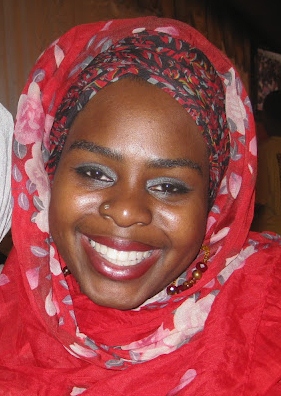
Tanya - fellow SVP volunteer - British Muslim with a Jamaican heritage

Following on from my previous entry I wanted to find out more about the religious aspects of the dress code.
This article explains why Muslim women wear a veil.  Known as a Hijab, this is different to the Niqab which is the black, full body plus face veil and is a related but different issue.  The article says that the reason for wearing the veil or headscarf is

“… because they believe God has made it an obligation for believing women.  In the Quran God tells the believing men and women to lower their gaze and to dress modestly.  He (God) specifically addresses women when He asks them not to show off their adornment, except that which is apparent, and draw their veils over their bodies”

“Islam is known as a religion concerned with community cohesion and moral boundaries, and therefore hijab is a way of ensuring that the moral boundaries between unrelated men and women are respected.  In this sense, the term hijab encompasses more than a scarf and more than a dress code.  It is a term that denotes modest dressing and modest behaviour.”

One argument is that wearing the hijab is a symbol of gender-based repression but many women see it as their right to wear a hijab and make independent choices proclaiming their independent thought.  They also feel liberated by the fashion dictates of the society, less vulnerable to sexual harassment in the work place and being valued for their minds and not how they look.

I get both arguments.  I see both sides.  The reality is that these issues apply to all women in all society and not just to Muslims.  While I understand that walking around being too ‘alluring’ (in any society) may well send the message that a woman is available for sexual favours that will be freely given there is also something wrong if women need to totally de-sexualise themselves in order to send the message they do not welcome sexual advances and will not freely perform sex acts on request.  In the end doesn’t it just come down to the belief that men cannot be expected to NOT ACT on any sexual feelings they have?

Of course religion always gets mixed up with the culture which is why different Islamic countries insist on different dress codes for women with some insistent on the full Niqab (burka) for women.

Tanya, a volunteer here is a Black British Muslim and wears a veil in the UK.  Interestingly she says that in the UK she has found that there is more emphasis on how she dresses where other Muslims will feel free to comment about her style of dressing than in The Sudan where she has been living for the past 8 months. Here, she told me, comments about her behaviour, such as sitting at the tea stall in the street on her own will raise comments or looks whereas in the UK this would not be an issue. 

The Koran says that wearing the veil indicates to all men that a woman is a woman of piety and therefore not to be molested; so I was surprised to hear that Tanya is regularly touched up when travelling on buses, despite being fully covered, because she is clearly not Sudanese; the assumption is that she is Nigerian and therefore foreign and therefore sexually available.

This article looks at one Leicestershire woman’s view of wearing a Niqab (full veil) and also discusses how this is a problem.

One woman's experience of wearing a Niqab in Leicester, UK.

“It is a strange thing for something so apparently anti-fashion, but the anonymous black silhouette of the burka and niqab has become a status symbol.  A sports star pulls on a pair of expensively-endorsed Nikes, a Tory politician dons an electric blue suit, and the Muslim woman who has to be seen as holier than thou draws a veil over her face.”

The relationship between religious practices and the culture it is practiced within is a complex one and the dividing line between what is pure religion and what is culture can be very blurred.

On Covering Up 1

Wedding guests the day after we arrived in Khartoum
Evidently I didn’t think much about what it would be like to live in a Muslim country regarding the dress code for women.  I think I had naively thought that it wouldn’t really apply to me as a westerner.  Obviously I did ask what the expectations were for dress, I spoke to previous volunteers etc. and the answer was long skirts, ¾ or long sleeves and no cleavage showing.  One said that she wore skirts to work but trousers in her own time and that as a Westerner, people would accept that a less rigorous adherence to the dress code was accepted.  We wouldn’t be expected to wear a head scarf or anything like that. I was fine with all that.  In fact, with the heat and the strong sun, you would not want to be exposing too much of your skin anyway.

I didn’t anticipate the heat of course.  You don’t actually want anything next to your skin in that heat.  You just want to get naked, have a cold shower and then lie on the bed under the ceiling fan – several times a day.  You want only the lightest of fabric over you when you are outside after 8 o’clock in the morning.  My 3 cotton dresses were fine indoors but to go outside, I had to wrap a scarf around my shoulders or wear a t-shirt under the dress.  For comfort and aesthetic reasons I hated doing both.  I walked like a robot when wearing the scarf so that it didn’t fall off and expose any skin so inelegantly had to tuck bits under my bra straps and I felt ugly pairing up t-shirts with a cotton sun-dress which were not designed to go together.  I know it will take time to adjust to the heat and hopefully in the not so far future I will be able function in the open air.

So focussing on the few things in my wardrobe that are suitable and lightweight at this moment I looked at myself in the mirror the other day and wanted to cry.  I was wearing a flouncy skirt a flouncy top.  My hair has a natural curl to it unless it is blow-waved but firstly cannot face the heat of the hairdryer and secondly, with the sweat followed by the constant showers it hardly seems worth it.  Ditto make-up.  The redeeming features are I am still wearing earrings and I have large sunglasses.  I looked and felt like a bundle of S@&% tied up in the middle as my Mum would have said if she could have seen me.  Of course, we all have those moments in England but here in the Sudan I realise that I am going to have to develop a whole new attitude to how I feel about how I look and dress.  You know, so much of our self-esteem is wrapped up in how we look and this set me off thinking. 

Generally speaking, we like to dress in the way that our peers dress - whoever we consider our peers to be - and when we don’t, we stand out and give rise to positive or negative comments from other members of that group.  We dress appropriately according to the occasion, with certain clothes for work, for relaxing with family or going to social events.  Our clothing is more than something to keep us warm it says a lot about our social standing and the messages we are giving other people.  Even relatively small things like wearing a poppy or a pin for cancer awareness or gay rights tells people a lot about us.


I am not a Muslim and my culture has a different dress code so what do I want to do?  How do I want to dress?  In the UK some would argue that other cultures should adapt to UK culture (particularly when it comes to wearing a full Burqa for example) but why shouldn’t they wear what they like?  So, the same here.  Why shouldn’t I wear a sleeveless top or even a short sleeved t-shirt?  What is wrong with wearing a below the knee skirt?  As I am white and therefore clearly not of this land why would anyone bat an eyelid at me not being dressed the same?  In England I am still taken aback when I see someone in a burqa, curious and wondering at the same time.  Is that how Sudanese people feel if they saw me in a short-sleeved t-shirt and a pair of trousers?  I just don’t get it really.  But what I know is that I feel uncomfortable and very aware of the fact that I would normally dress differently to those around me and could not be relaxed if I was exposing my arms, legs, or chest (I don’t mean cleavage) in public.  I don’t want to be different if the truth be told.

Susanna Chooses to wear a head scarf in public even though she is not Muslim
Susanna, a 20 year old SVP volunteer, chooses to not only cover up her body but also her hair with a scarf even though she is a devout Christian.  She said that it was out of respect for the Sudanese culture and the only time Muslims have asked her to take it off was in a class of female students who wanted to have more of an ‘American’ English lesson.  Another ex-volunteer I saw but did not speak to also chooses to cover her head even though she is not a Muslim.  I find this interesting and maybe this is partly due to wanting to fit in and not stand out.

But one confusing thing is that given that there is a dress code, why are there not more appropriately designed clothes available in the Sudan?  We went to a plush wedding a couple of days after we arrived and the women wore obviously very expensive western style strappy evening dresses.  But under this they wore the equivalent of a nylon roll neck jumper in either a matching or contrasting colour.  Why?  Why not wear a dress that has sleeves and covers your chest?  Also the dresses of the bride and bridesmaids were strapless and showed their chest. 
The bride surprisingly wears an off the shoulder dress
Why do women not wear evening dresses with sleeves?

I am puzzled!